
Skip to content

What Are the Top China Passenger Cart Manufacturers?

Choosing the right Passenger Cart manufacturer in China requires more than comparing prices or browsing polished product photos. Buyers must examine engineering quality, production experience, battery systems, customization options, and after-sales support. A reliable manufacturer should explain its testing process clearly, provide consistent technical documents, and demonstrate how its carts perform in real environments.

This guide explores leading China Passenger Cart manufacturers and the strengths that may separate one supplier from another. It considers airport transfers, resorts, hotels, factories, campuses, and other passenger transport applications. Details such as seating capacity, turning radius, charging time, frame materials, weather protection, and maintenance access can affect daily operating costs.

Small details matter.

The evaluation also considers manufacturing transparency. Factory visits, sample inspections, reference projects, and communication quality can reveal more than advertising claims. Certifications and safety documentation should be checked against the buyer’s destination requirements, rather than accepted without question. Some manufacturers offer impressive customization, but excessive options may complicate repairs or delay delivery.

No supplier is perfect.

Performance can vary between models, batches, and operating conditions. A cart that works well on flat resort paths may struggle on steep industrial routes or uneven outdoor surfaces. This article therefore balances manufacturer reputation with practical evidence, helping buyers develop a more realistic shortlist. The goal is not to name one universal winner, but to identify suppliers that offer dependable value, clear communication, and suitable long-term support.
What Are the Top China Passenger Cart Manufacturers?

What Is a Passenger Cart and How Is It Used in China?

What Are the Top China Passenger Cart Manufacturers?

What Is a Passenger Cart and How Is It Used in China?

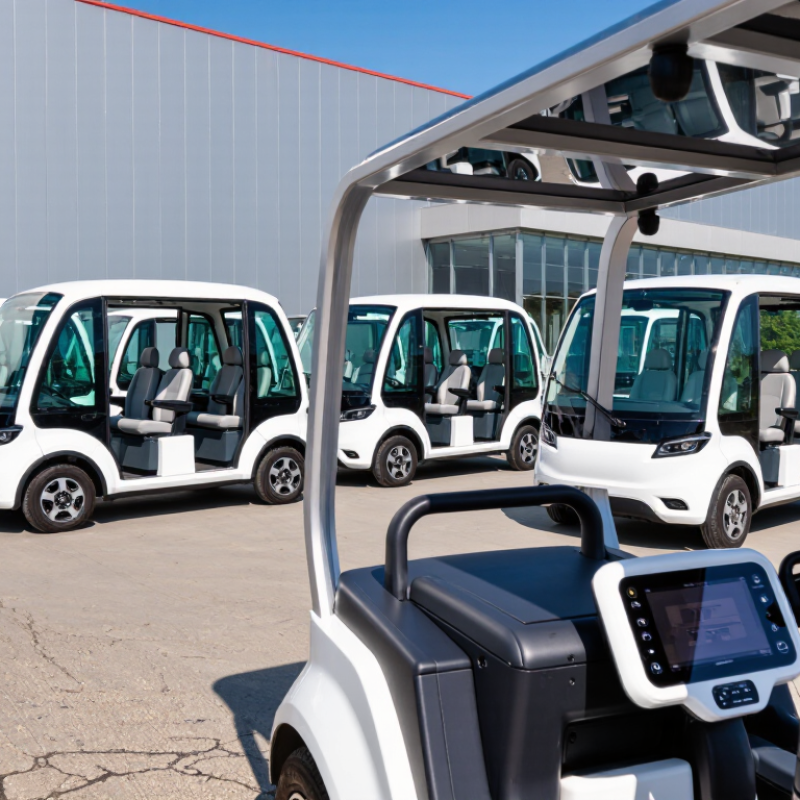
A passenger cart is a compact vehicle designed to move people over short distances. In China, operators use it in tourist parks, campuses, hospitals, factories, airports, and large residential communities. Most models carry four to fourteen passengers. They usually use electric power, quiet motors, and low-speed controls.

The China Association of Automobile Manufacturers reported 9.495 million new-energy vehicles sold in 2023. That figure does not represent passenger carts directly. However, it shows China’s mature electric-vehicle supply chain. The International Energy Agency also reported that China produced more than half of global electric cars in 2023. This background supports strong local sourcing for batteries, controllers, motors, and frames. Still, cart quality can vary widely. A polished vehicle is not always a reliable one.

Tips: Compare battery warranty, climbing ability, braking distance, seat protection, charging time, and spare-parts access. Ask for test records under full passenger load. Check the vehicle’s operating environment, not just its maximum range. Indoor campuses need different designs from uneven resort roads. Certification documents matter, but field service matters more. My practical concern is often overlooked: buyers may calculate purchase price, then forget tires, batteries, training, and downtime. A simple total-cost worksheet can prevent that mistake.

What Is a Passenger Cart and How Is It Used in China?

Passenger carts in China are commonly used for short-distance transportation at golf courses, resorts, tourist attractions, campuses, airports, railway stations, and large industrial or exhibition sites. The chart shows representative seating configurations commonly used for these applications; actual capacity varies by vehicle design, operating conditions, and local safety requirements.

The figures represent seats per vehicle rather than manufacturer output, sales volume, or market share.

How Are China’s Passenger Cart Manufacturers Classified?

China’s passenger cart manufacturers are best classified by application, power system, and manufacturing depth. This method is more useful than ranking factories by export volume alone. Industrial market reports commonly separate carts into golf, resort, airport, campus, and urban shuttle categories. Each category demands different seating layouts, braking systems, turning radii, and weather protection.

Powertrain creates another clear division. Battery-electric manufacturers focus on low noise, short routes, and indoor or semi-enclosed operations. Lead-acid systems usually reduce purchase costs, while lithium-based systems support faster charging and lower maintenance. Hybrid and fuel-powered producers serve longer routes where charging access remains limited.

Grand View Research estimated the global golf cart market at about US$1.9 billion in 2023, but definitions vary between reports. That matters. Some include utility carts, while others count only passenger models.

Manufacturers can also be grouped by production capability. Assembly-focused factories often source controllers, axles, and battery packs externally. Integrated producers may design frames, body panels, electrical systems, and testing procedures in-house.

Buyers should check ISO 9001 certification, load testing, battery safety records, and documented quality-control stages. The International Organization for Standardization stresses process consistency, not marketing claims.

In practice, factory audits reveal more than polished brochures. A useful audit examines weld quality, seat anchoring, steering response, and water resistance.

Classification is not perfect. A factory may fit several groups, and smaller suppliers can outperform larger exporters on custom engineering.

Which Companies Are Leading China Passenger Cart Manufacturing?

China’s leading passenger cart manufacturers are increasingly judged by engineering depth, not factory size alone. The International Energy Agency’s Global EV Outlook 2024 reported that China sold about eight million electric cars in 2023, representing more than 60% of global electric car sales. That scale supports strong battery, motor, and controller supply chains for passenger carts.

The China Association of Automobile Manufacturers recorded 9.59 million new-energy vehicles produced in 2023. However, passenger carts are not fully represented in that figure. This matters. A factory may advertise high output while offering limited cart-specific testing.

More dependable manufacturers usually provide traceable battery cells, thermal protection, regenerative braking, and documented load testing. Their vehicles often use reinforced frames, sealed connectors, and suspension tuned for uneven resorts or industrial campuses.

Certification evidence deserves close attention. Manufacturers serving overseas buyers should demonstrate quality-management controls, electrical safety testing, and market-specific compliance documents. Production experience also appears in practical details: consistent welds, accessible service panels, and replacement parts with clear codes.

Some suppliers still publish impressive range figures under ideal conditions. Real payload, slopes, weather, and passenger frequency can reduce that distance considerably. Buyers should request independent test records, warranty terms, and after-sales response times before naming any company a market leader.

What Technologies and Standards Shape Their Production?

Leading China passenger cart manufacturers increasingly compete through engineering discipline, not appearance alone. Their production lines often combine robotic welding, digital battery testing, and computer-controlled machining. These systems improve frame accuracy and reduce inconsistent assembly.

Electric models commonly use lithium battery management systems, regenerative braking, and sealed motor controllers. Sensors monitor temperature, current, and charging conditions in real time. That matters in crowded terminals and uneven outdoor routes. Quiet operation matters too. However, software is not automatically reliable. Manufacturers still need repeated road tests under heat, rain, slopes, and heavy passenger loads.

Standards shape each production decision. ISO 9001 supports traceable inspections, while ISO 12100 guides machinery risk assessment. Electrical designs may reference IEC requirements and applicable electromagnetic compatibility rules. Battery transport and testing also depend on destination-market regulations. Local certification remains essential because requirements differ between airports, resorts, factories, and public roads.

A dependable factory records weld checks, brake-distance results, insulation tests, and battery-cycle data. It should also provide clear maintenance instructions and replacement-part information. These details show practical experience. Yet no production process is flawless. A strong manufacturer admits failure patterns, investigates root causes, and updates its design. That attitude is often more valuable than a polished brochure.

How Should Buyers Evaluate and Choose a Chinese Manufacturer?

Choosing among China passenger cart manufacturers requires more than comparing online prices.

Buyers should examine production experience, engineering capability, and after-sales support. Request factory videos, current production photos, and clear details about welding, paint quality, battery systems, and safety testing. A polished showroom is not proof of consistent manufacturing.

Ask for a sample vehicle before placing a large order. Test braking, steering, suspension, turning radius, noise, and battery performance under real passenger loads.

Review inspection records and relevant certificates, but verify that documents match the exact model. Check whether the manufacturer can provide spare parts, wiring diagrams, maintenance instructions, and remote technical support. Communication matters. Slow or vague replies may become expensive after delivery.

Tips:

Compare the full ownership cost, not only the unit price. Include shipping, batteries, chargers, replacement parts, training, and warranty terms.

Request references from buyers using similar carts in hotels, resorts, campuses, or transport facilities. Confirm delivery dates in writing, including inspection procedures and remedies for defects.

Be careful with custom designs. Small changes to seating, doors, or charging systems can affect testing and serviceability.

I have seen attractive specifications fail in daily use because buyers skipped load testing. That mistake is avoidable.

Still, no evaluation is perfect; supplier conditions and component quality can change, so review key evidence before every purchase.

“Guardian has been a tremendous help in providing storage and distribution solutions for AIR Global. We came to Guardian with a need, and they quickly found a solution for us at a very reasonable price. Our business is very demanding, especially during busy periods, and Guardian has been flexible and able to accommodate all requests with less than 48 hours’ notice. April, our main contact, has been extremely helpful in making sure our orders are shipped on time and that our inventory is accurate. I highly recommend using Guardian and look forward to continuing our relationship for many years to come.”

Matt Buffington
Director of Supply and Operations
Americas

“The Guardian Logistics Team is responsive and helpful on a consistent basis.  This removes a tremendous amount of stress and gives us incentive to route cargo that will touch your dock. Thanks for all that you do!!!”

Charles Reel
Branch Manager
Scan Global Logistics

“I recommend with great confidence, Guardian Logistics Solutions and owner, Brent Smith to whomever needs top shelf deliveries including Last Mile, White Glove, Residential and Commercial.

I have known GLS since its inception. Guardian is always looking for the right answer to solve the customer’s problem. I can, without hesitation, recommend Guardian Logistics to any company that is looking for the best service in their coverage area. They will team with you to create a solution that suits your needs and ensure you are satisfied with the outcome.”

Steven T. Nelson

“I highly recommend Guardian Logistics Solutions. The professionalism and communications offered by the team, along with speediness, cost saving solutions and attitude is a testament to the fact that this is one of the most important partners you can have in the freight movement business.

The company offers exemplary service, they continuously exceed our expectations and that of the importers, they help us service, Guardian Logistics Solutions is the best solid business partner you should add to your company.”

Ubaldo Sierra
Maersk Customs Brokers
General Manager

“Guardian Logistic Solutions is one of those rare companies who under-promise-and-over-deliver EVERY single time!”

James Burke
Manager, Sales Team
OLIMP Warehousing

“I want to thank the team at Guardian for the excellent service we have received.
The shipments have been professionally handled and freight arrives timely and in good order at a fair price. Communication is a very important part of the handling and Guardian does a great job of communication through the delivery.”

Cheri Zetrouer
Access Worldwide
Customs Brokers & Freight Forwarders

“I am very lucky to have found Guardian Logistics to help with our freight needs.  Our business is a bit unique in that we only receive a shipment every 2-3 months and we have to stick to a very strict time schedule in order to unload the delivery.  We found it virtually impossible to consistently coordinate with logistics companies to have shipments arrive on time and when they were expected. After multiple frustrating scenarios, our broker introduced us to Guardian Logistics who handled all of our shipments recently to perfection. Our shipments have arrived on time, when expected, with friendly and helpful drivers.  We will only be using Guardian moving forward for all of our shipping and freight needs. I couldn’t recommend them strongly enough!”

Trey Conrad
Owner
Patriot Power Source

“We have been working with the Guardian company for several years now and I can say without a doubt that their entire team cares about the service they provide. Their personal interest in their customers’ success makes them a standout in the world of final mile delivery.

I highly recommend Guardian for anyone requiring outstanding services in warehousing and final mile delivery programs.”

Frank Ianucilli
Director of Final Mile Operations
Werner Enterprises

“At WeFixFreight.com, client satisfaction is our main priority.  We are proud to partner with the top notch team at Guardian to bring our customers nothing but the best service when it comes to freight reworks, cross docking services, and final mile delivery.”

Bill Carlin
CEO
WeFixFreight.Com

“The Guardian Logistics staff has always been exceptional, and these days, with all the competition out there, it’s the service that matters. We appreciate all they do and look forward to continuing our business with GLS.”

Cathy Avolio
Ocean Import Manager
Mallory Alexander Int'l Logistics (NY), LLC
Back To Top