
Skip to content

Why Choose a Tumbler Mug for Your Brand?

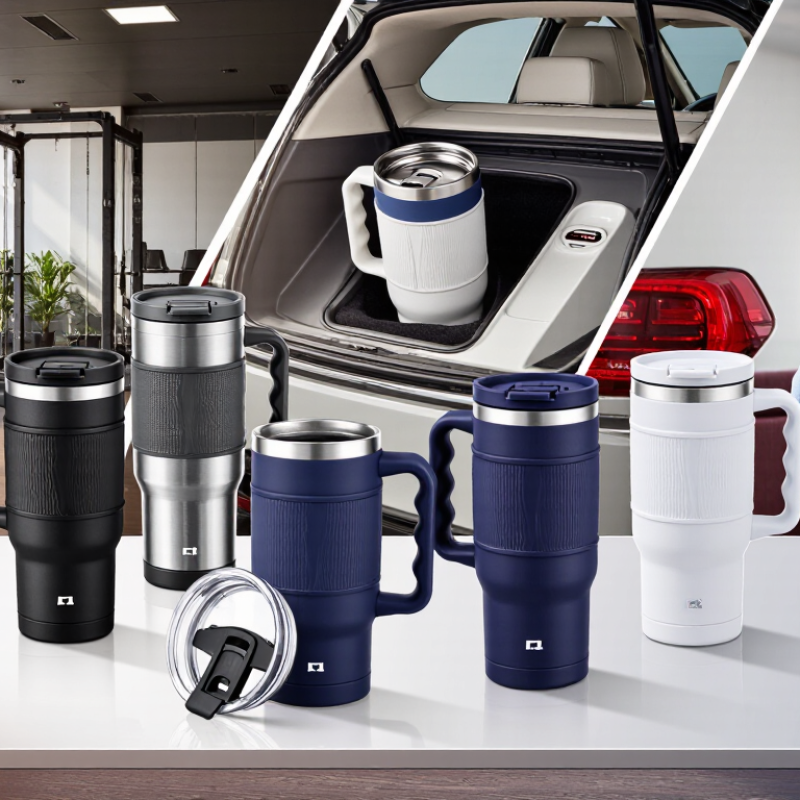
Why choose a Tumbler Mug for your brand? The answer is not simply its popularity. It is the daily visibility created when a customer carries your logo through offices, gyms, cars, and airport lounges.

Grand View Research valued the global reusable water bottle market at approximately $9.67 billion in 2023. It also projects a 4.4% compound annual growth rate from 2024 to 2030. Tumblers represent only one part of this category. Market definitions vary, so the numbers should not be treated as exact Tumbler Mug sales. Still, the direction is clear: consumers increasingly value reusable, portable drinkware.

Terence Reilly, former president of Stanley, described the brand’s purpose simply: “We want to be a part of people’s everyday lives.” That principle matters for promotional products. A useful Tumbler Mug can create repeated brand impressions without demanding attention. Its lid, handle, powder-coated surface, and insulation should support real routines, not just attractive photographs. A 2024 report from Fortune Business Insights also identifies sustainability and convenience as major forces shaping the reusable bottle market.

The detail that gets overlooked is fit. A mug that leaks inside a laptop bag damages trust quickly. A lid that is difficult to clean may become unused. Your brand therefore needs more than a printed logo. It needs tested materials, clear care instructions, responsible packaging, and a design people will genuinely carry. That is not guaranteed. It requires honest product testing.
Why Choose a Tumbler Mug for Your Brand?

What Is a Tumbler Mug and How Does It Work?

A tumbler mug is a reusable drinking vessel designed to hold hot or cold beverages. Most models use double-wall construction, often with a vacuum between the walls. This empty space slows heat transfer through conduction and convection. Your coffee stays warmer, while iced water melts more slowly. It is not magic.

The lid also affects performance. A tight seal limits heat loss and helps prevent spills during commuting. Some lids use sliding covers, while others include openings for straws. The mouth opening should balance comfort with control. A wide opening is easier to clean, but it may release heat faster. From practical testing, the small details matter: grip texture, cup balance, and the lid’s resistance to daily movement.

For a brand, this function creates useful space for identity and repeated visibility. However, choosing a tumbler requires more than checking its appearance. Food-contact materials should be clearly specified, and removable parts should be easy to wash. Insulation claims should come from consistent testing, not vague promises. No tumbler performs perfectly. A metal exterior may feel hot near the rim, and a complex lid can collect residue. Those weaknesses deserve honest attention before customization. A reliable tumbler should feel stable in the hand, close securely, and remain practical after repeated use. That is where thoughtful design becomes more valuable than decoration.

Why Choose a Tumbler Mug for Your Brand? - What Is a Tumbler Mug and How Does It Work?

Evaluation Dimension Typical Tumbler Mug Information How It Works or Why It Matters Brand Customization Opportunity
Definition A reusable beverage container with a narrow opening, lid, and usually a double-wall body. The lid helps reduce spills, while the insulated body can slow heat transfer between the beverage and the surrounding environment. Use the product shape, lid style, and surface finish to create a consistent visual identity.
Common Capacity Approximately 300–900 milliliters, depending on the intended use. Smaller sizes suit espresso-based drinks and short commutes; larger sizes accommodate water, tea, coffee, and cold beverages. Select a capacity that matches the daily routines and beverage preferences of the target audience.
Insulation Structure Double-wall construction with an air gap or vacuum between the inner and outer walls. The separation reduces conduction and convection, helping beverages retain their temperature longer than in many single-wall containers. Communicate practical temperature-retention benefits without making unsupported time or temperature claims.
Typical Materials Stainless steel, polypropylene, silicone, glass, or combinations of these materials. Stainless steel is commonly used for durability and insulation; polypropylene and silicone are often used for lids, seals, and grip components. Choose materials according to durability, appearance, weight, cleaning requirements, and intended price position.
Temperature Use Suitable models may be designed for hot drinks, cold drinks, or both. A secure lid and heat-resistant components can improve usability, but the product should be used according to its safety instructions. Define the primary use case clearly, such as commuting, office hydration, outdoor activities, or hospitality service.
Leak Resistance Depends on the lid mechanism, gasket quality, closure design, and correct assembly. Silicone seals and locking or threaded lids can help limit leakage, but leak resistance is not automatically the same as being fully leakproof. Use verified testing results and accurate wording when describing leak-resistant performance.
Portability Designed for carrying in a hand, cup holder, bag, or backpack, depending on its dimensions. A tapered base, secure lid, comfortable grip, and manageable weight can make a tumbler easier to carry during daily travel. Optimize dimensions and accessories for commuting, events, travel, fitness, or workplace use.
Cleaning Requirements Regular washing is needed, especially around the lid, drinking opening, and silicone gasket. Removable parts can make cleaning easier and help reduce residue buildup; dishwasher suitability varies by component and product design. Provide clear care instructions and consider wide openings or detachable lids for better everyday maintenance.
Reusable Value Designed for repeated use rather than single-use beverage consumption. Repeated use can reduce dependence on disposable cups when the tumbler is maintained and used consistently. Position the product around long-term utility, responsible consumption, and repeated customer exposure.
Decoration Areas Common decoration zones include the body, lid, sleeve, and gift packaging. Large, smooth surfaces generally provide more room for readable graphics than heavily curved or textured areas. Apply logos, artwork, color blocking, laser engraving, or printed messages according to the surface and production method.
Durability Factors Influenced by wall thickness, material quality, lid construction, coating, and resistance to daily handling. A durable design can withstand repeated transport and use, although no tumbler is completely immune to dents, scratches, or damage. Match the construction level to the expected usage environment and the desired customer experience.
Best-Fit Use Cases Commuting, office work, meetings, conferences, travel, outdoor activities, and employee gifting. The combination of portability, reusable design, and visible surface area supports frequent practical use. Choose messaging, colors, and packaging that reflect the event, audience, season, or campaign objective.

Note: Specifications vary by product design. Capacity, materials, insulation performance, cleaning instructions, and leak-resistance claims should be confirmed through the applicable product documentation and testing.

Which Brand Benefits Do Tumbler Mugs Offer?

Why Choose a Tumbler Mug for Your Brand?

Tumbler mugs offer practical visibility because people carry them through offices, gyms, cars, and airports. Their large printable surface keeps a logo visible during daily routines. Grand View Research valued the global reusable water bottle market at approximately USD 9.67 billion in 2023. This growth suggests strong consumer interest in reusable drinkware. However, market demand alone does not guarantee brand impact.

A well-designed tumbler can support brand recall through repeated, useful contact. It may also communicate care for convenience and reduced single-use consumption. NielsenIQ’s 2023 Global Sustainability Study reported that 78% of U.S. consumers consider a sustainable lifestyle important. That figure supports responsible merchandise choices, but it should not encourage exaggerated environmental claims. A tumbler is not automatically sustainable. Materials, durability, packaging, and end-of-life options still matter. I have seen attractive products become unused when lids leak or sizes feel impractical.

Tips: Choose a leak-resistant lid, a comfortable grip, and a capacity suited to commuting. Use durable decoration methods. Explain care instructions clearly. Avoid vague “eco-friendly” language without evidence. Small details build trust.

Brand teams should measure more than distribution numbers. Track repeat use, customer feedback, and employee adoption. A simple survey may reveal whether the mug travels daily or stays in a drawer. That answer can be uncomfortable, but it is more reliable than assumptions.

How Do Tumblers Support Customization and Brand Identity?

A tumbler mug turns daily hydration into a visible brand experience. Its large surface supports logos, colors, slogans, and campaign artwork. More importantly, users carry it through offices, gyms, commutes, and meetings. According to the 2023 PPAI Consumer Study, 88% of consumers could recall an advertiser from a promotional product. Usefulness matters. A tumbler works best when its design fits real routines, not only a marketing brief.

Customization should reflect identity through practical details. A matte finish can suggest calm, premium positioning, while vivid colors create stronger shelf and event visibility. Laser engraving offers durability for simple marks, while full-color printing supports illustrations and seasonal campaigns. Lid shape, grip texture, insulation, and capacity also influence perception. These choices communicate quality before anyone reads the message. Keep it useful. A beautiful tumbler that leaks can damage trust quickly.

The 2023 ASI Ad Impressions Study reported that drinkware generated approximately 1,400 impressions per month. That exposure can support recognition when the visual system stays consistent across packaging, digital content, and merchandise. Yet customization is not automatically strategic. Too many colors, tiny details, or crowded slogans may weaken readability. In practice, a restrained design often performs better. This is an area worth testing, because audience preferences vary by age, workplace, climate, and drinking habits. Track redemption, repeat use, and feedback rather than assuming visibility equals loyalty.

What Materials, Features, and Sizes Should Brands Consider?

Why Choose a Tumbler Mug for Your Brand?

Material selection should begin with daily use, not appearance. Food-grade 18/8 stainless steel offers durability, neutral taste, and strong insulation. Polypropylene can reduce weight and cost, but it may feel less premium. For clear lids, BPA-free copolyester provides useful impact resistance. The 2024 Grand View Research analysis values the global reusable water bottle market at approximately USD 8.6 billion, showing sustained demand for reusable drinkware. However, market growth does not excuse vague material claims. Brands should request supplier test reports and verify food-contact compliance.

Features must solve real problems. A secure slider lid, silicone seal, and wide opening help prevent leaks and simplify cleaning. Vacuum insulation is useful for commuters, while a textured powder coating improves grip on a crowded desk. The International Housewares Association’s consumer research continues to identify convenience and durability as major purchase factors. That sounds obvious. It is still easy to overlook.

Size changes the product experience. A 12–16-ounce tumbler suits short commutes and compact cup holders. A 20–24-ounce version supports longer workdays without becoming awkwardly heavy. Larger models may increase visibility, but they can reduce portability. In practical sampling, lids often fail before the cup body does, especially after repeated dishwasher cycles. That deserves attention. Test filled tumblers in bags, car holders, and office drawers. Perfect performance is unlikely, but honest testing reveals which compromises customers will actually accept.

Why Choose a Tumbler Mug for Your Brand?

Material density helps brands balance durability, portability, insulation potential, and perceived quality when selecting a tumbler construction.

Approximate material density at room temperature: 304 stainless steel is about 8.0 g/cm³, aluminum about 2.7 g/cm³, Tritan™ copolyester about 1.2 g/cm³, and polypropylene about 0.9 g/cm³. Finished tumbler weight also depends on wall thickness, lid design, handle construction, and accessories. For most branded programs, common capacity choices include 350 ml, 473 ml, 591 ml, and 887 ml, while double-wall construction and leak-resistant lids are practical feature considerations.

How Can Brands Choose the Right Tumbler Mug for Their Audience?

How Can Brands Choose the Right Tumbler Mug for Their Audience?

Choosing a tumbler mug should begin with audience behavior, not decoration. Grand View Research valued the global reusable water bottle market at about USD 8.3 billion in 2023. Its forecast also shows continued growth through 2030. This signals demand, but market growth alone cannot select the right product.

A commuter may prefer a 350 ml slim mug that fits a car holder. A gym user may need 600 ml capacity, a leak-resistant lid, and a textured grip. Office users often value quiet sliding lids and easy cleaning. Small details matter.

Material needs practical testing. Stainless steel can support temperature retention, while powder coating improves grip and visual consistency. However, heavier mugs may frustrate users who carry them all day. The ASI Ad Impressions Study has reported that promotional drinkware can generate thousands of monthly impressions through repeated use.

Visibility is valuable, but only when the mug remains useful. PPAI consumer research also indicates that recipients respond better to promotional products with everyday utility. That makes capacity, lid performance, and cleaning access stronger priorities than oversized decoration.

A perfect tumbler does not exist. Brands should test prototypes with real users, including left-handed drinkers and people who wash mugs by hand. Check condensation, odor retention, and one-handed opening. Review the findings honestly.

A beautiful mug that leaks is still a poor brand experience. Sustainability claims also require evidence, such as material composition, packaging details, and verified supplier documentation.

Article Source:

“Guardian has been a tremendous help in providing storage and distribution solutions for AIR Global. We came to Guardian with a need, and they quickly found a solution for us at a very reasonable price. Our business is very demanding, especially during busy periods, and Guardian has been flexible and able to accommodate all requests with less than 48 hours’ notice. April, our main contact, has been extremely helpful in making sure our orders are shipped on time and that our inventory is accurate. I highly recommend using Guardian and look forward to continuing our relationship for many years to come.”

Matt Buffington
Director of Supply and Operations
Americas

“The Guardian Logistics Team is responsive and helpful on a consistent basis.  This removes a tremendous amount of stress and gives us incentive to route cargo that will touch your dock. Thanks for all that you do!!!”

Charles Reel
Branch Manager
Scan Global Logistics

“I recommend with great confidence, Guardian Logistics Solutions and owner, Brent Smith to whomever needs top shelf deliveries including Last Mile, White Glove, Residential and Commercial.

I have known GLS since its inception. Guardian is always looking for the right answer to solve the customer’s problem. I can, without hesitation, recommend Guardian Logistics to any company that is looking for the best service in their coverage area. They will team with you to create a solution that suits your needs and ensure you are satisfied with the outcome.”

Steven T. Nelson

“I highly recommend Guardian Logistics Solutions. The professionalism and communications offered by the team, along with speediness, cost saving solutions and attitude is a testament to the fact that this is one of the most important partners you can have in the freight movement business.

The company offers exemplary service, they continuously exceed our expectations and that of the importers, they help us service, Guardian Logistics Solutions is the best solid business partner you should add to your company.”

Ubaldo Sierra
Maersk Customs Brokers
General Manager

“Guardian Logistic Solutions is one of those rare companies who under-promise-and-over-deliver EVERY single time!”

James Burke
Manager, Sales Team
OLIMP Warehousing

“I want to thank the team at Guardian for the excellent service we have received.
The shipments have been professionally handled and freight arrives timely and in good order at a fair price. Communication is a very important part of the handling and Guardian does a great job of communication through the delivery.”

Cheri Zetrouer
Access Worldwide
Customs Brokers & Freight Forwarders

“I am very lucky to have found Guardian Logistics to help with our freight needs.  Our business is a bit unique in that we only receive a shipment every 2-3 months and we have to stick to a very strict time schedule in order to unload the delivery.  We found it virtually impossible to consistently coordinate with logistics companies to have shipments arrive on time and when they were expected. After multiple frustrating scenarios, our broker introduced us to Guardian Logistics who handled all of our shipments recently to perfection. Our shipments have arrived on time, when expected, with friendly and helpful drivers.  We will only be using Guardian moving forward for all of our shipping and freight needs. I couldn’t recommend them strongly enough!”

Trey Conrad
Owner
Patriot Power Source

“We have been working with the Guardian company for several years now and I can say without a doubt that their entire team cares about the service they provide. Their personal interest in their customers’ success makes them a standout in the world of final mile delivery.

I highly recommend Guardian for anyone requiring outstanding services in warehousing and final mile delivery programs.”

Frank Ianucilli
Director of Final Mile Operations
Werner Enterprises

“At WeFixFreight.com, client satisfaction is our main priority.  We are proud to partner with the top notch team at Guardian to bring our customers nothing but the best service when it comes to freight reworks, cross docking services, and final mile delivery.”

Bill Carlin
CEO
WeFixFreight.Com

“The Guardian Logistics staff has always been exceptional, and these days, with all the competition out there, it’s the service that matters. We appreciate all they do and look forward to continuing our business with GLS.”

Cathy Avolio
Ocean Import Manager
Mallory Alexander Int'l Logistics (NY), LLC
Back To Top