How to Choose a Last Mile Delivery Service in 2026?
Choosing a last mile delivery service in 2026 requires more than comparing advertised prices. Delivery expectations are rising, while fuel costs, labor shortages, and urban traffic continue to affect performance. A service that looks efficient on paper may struggle during holiday peaks, heavy rain, or sudden order surges.
The right choice begins with operational evidence. Examine delivery success rates, average transit times, damage claims, and customer support response times. Ask how parcels are tracked from the warehouse to the doorstep. Request clear service-level commitments, realistic delivery windows, and transparent fees for residential, remote, or oversized shipments. Small details matter. A late evening scan can prevent an unnecessary customer complaint.
Technology also deserves careful attention. Reliable route optimization, live tracking, proof of delivery, and flexible delivery instructions can improve both efficiency and customer trust. However, software cannot repair weak local operations. Speak with current clients when possible, test a limited shipping volume, and review performance data after several weeks. That practical trial often reveals more than a polished sales presentation.
Security and compliance should remain non-negotiable. Choose providers with documented handling procedures, trained drivers, privacy safeguards, and appropriate insurance coverage. Their policies should support lawful, safe, and responsible deliveries across every service area. Sustainability may influence the decision too, especially through electric vehicles, consolidated routes, and recyclable packaging.
There is no universal winner. The cheapest provider may create expensive service failures. The most advanced platform may lack dependable neighborhood coverage. Evaluate the complete delivery experience, not one attractive metric. A careful decision in 2026 should balance reliability, visibility, scalability, customer experience, and long-term value. Still, assumptions should be tested. Conditions change quickly.
Understanding Last Mile Delivery Services and Their Role
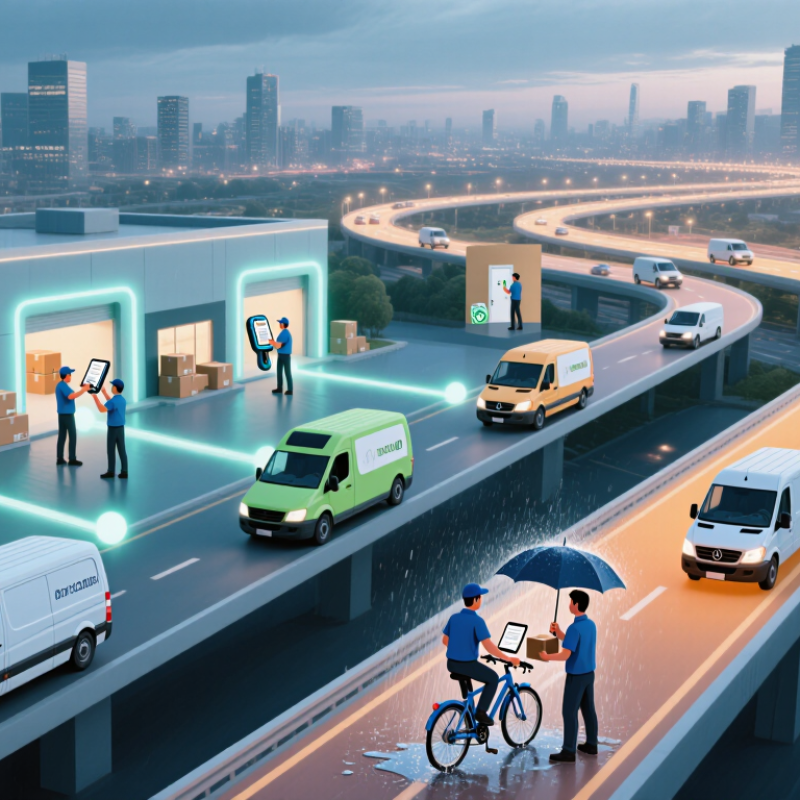
A last mile delivery service moves an order from a local hub to the customer’s door. It is often the most visible part of the delivery experience. A late arrival, damaged package, or unclear update can quickly reduce customer trust.
In 2026, businesses should examine delivery accuracy, coverage, tracking quality, and customer support. Ask how addresses are verified and how failed deliveries are handled. Real-time tracking helps customers plan around arrival windows. Clear proof of delivery also supports reliable records. Test the service with different locations, weather conditions, and package sizes. Small trials reveal problems that sales promises may hide.
Look beyond speed. A dependable service protects customer information and follows relevant transport, privacy, and safety requirements. It should explain delivery procedures in plain language. Experienced providers can share performance data, service limits, and practical response plans. Useful measures include on-time rates, damage reports, response times, and successful first-attempt deliveries.
No checklist is perfect. I have seen fast delivery create more complaints when tracking updates were vague. Lower prices can also bring hidden handling limits. A careful decision balances cost, consistency, communication, and local operating knowledge. The best choice may not be the fastest option. It should fit the product, customer expectations, and the actual streets where deliveries happen.
Defining Your Delivery Requirements and Customer Expectations
Choosing a last-mile delivery service in 2026 starts with an honest delivery brief. Define where orders go, when customers expect them, and what “on time” means. A city apartment needs different handling than a rural home. Record parcel dimensions, average weights, daily volume, peak days, and delivery windows. Include fragile items, signature needs, and temperature limits. Measure failed delivery causes. “Customer unavailable” is not enough. A locked gate at 7 p.m. tells more.
Customer expectations need evidence, not assumptions. Review support tickets, returns, ratings, and checkout surveys from the past six months. Ask whether buyers prefer narrow time slots, evening attempts, pickup points, or live updates. Some customers value speed; others value predictable arrival. State the promise plainly at checkout and repeat it after dispatch. Avoid promising same-day delivery when traffic or poor address data makes it unreliable. Track on-time rates, first-attempt success, damaged parcels, response times, and cost per order.
Turn these requirements into a trial scorecard before signing an agreement. Pilot 100 to 200 orders across different neighborhoods and delivery windows. Compare results against your promised service levels. Test address corrections, missed attempts, customer notifications, and complaint handling. It will not be perfect. That is useful. Ask how delivery proof is stored, who can access it, and how exceptions are escalated. Review the data monthly, because customer expectations can shift faster than your delivery process.
Evaluating Technology, Tracking, Sustainability, and Security
Choosing a last mile delivery service in 2026 requires more than comparing prices. In my delivery audits, technology has become the operational backbone. Look for route planning that uses live traffic, delivery windows, vehicle capacity, and failed-attempt history. A useful platform should connect with inventory and order systems without demanding manual re-entry. Manual work creates quiet errors.
Tracking must serve both customers and operations teams. Real-time location data is helpful, but accuracy matters more than flashy maps. Check update frequency, arrival estimates, proof of delivery, and exception alerts. A timestamp, recipient confirmation, and delivery photo can clarify disputes. Test the system in dense streets, weak-signal areas, and apartment buildings. One smooth demonstration proves little.
Sustainability needs measurable evidence. Ask for emissions reporting by route, vehicle type, and parcel volume. Electric vehicles may reduce local pollution, but charging access and route length still affect performance. Security deserves equal attention. Review encryption, access controls, employee training, incident response, and data retention. Customer addresses should not remain visible longer than necessary. During one trial, I found an accurate tracker that exposed too much information to casual users. That failure changed my evaluation checklist. No service is perfect. The best choice reports weaknesses clearly, fixes them quickly, and provides evidence instead of promises.
Selecting a Provider Through Cost and Performance Analysis
How to Choose a Last Mile Delivery Service in 2026?
Price is only the visible layer. The 2019 Last-Mile Delivery Challenge report estimated that last-mile delivery can represent 41% of supply-chain costs. That makes small surcharges matter. Compare base rates, fuel adjustments, address fees, waiting time, returns, and redelivery charges. Then calculate cost per successfully delivered parcel, not cost per attempted stop. A cheap failed delivery is not cheap.
For performance, request lane-level data, not a national average. Track on-time delivery, first-attempt success, scan accuracy, damage claims, response time, and return-cycle days. Use a 30-day pilot with identical parcel sizes and delivery windows. The World Economic Forum’s 2020 analysis projected a 78% increase in urban delivery demand by 2030, alongside 36% more delivery vehicles. Capacity and curb efficiency belong in the scorecard. Ask how peak days are staffed.
Do not hide uncertainty. Forecasts often assume clean addresses, stable fuel prices, and cooperative recipients. Real streets contain locked doors, elevators, rain, and customers who change delivery windows. Weight cost against measured service results, then review the scoring model with finance and operations teams. A spreadsheet can still lie. Use audited invoices and anonymized tracking records before signing a long-term agreement. One uncomfortable finding may be useful: the lowest bid can expose the highest operational risk.